Claddagh Ring Meaning: History, Legend and How to Wear It
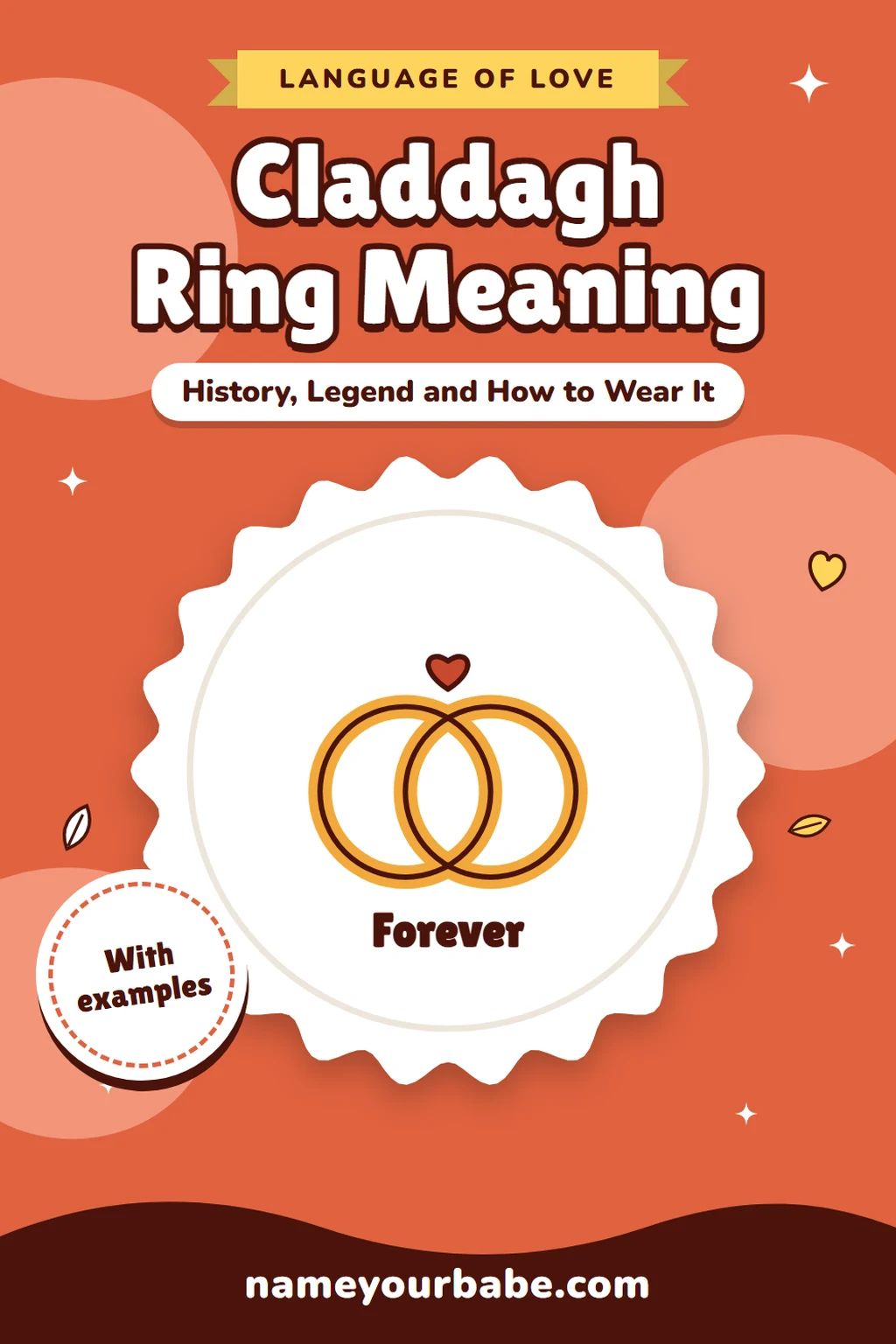
The Claddagh ring meaning is love, friendship and loyalty, shown in one design: two hands holding a heart, with a crown on top. The heart stands for love, the hands for friendship and the joining of two people, and the crown for loyalty. It's named after the Claddagh, a fishing village beside the city of Galway in the west of Ireland, and Galway goldsmiths have been making rings of this kind for more than 300 years.
The ring's story mixes solid history with a good legend. Galway City Museum owns the oldest known example, made around 1700 by a goldsmith named Richard Joyce. There's a dramatic tale about how Joyce learned his craft, there's a real village with its own elected "king," and there's a famous rule about which way to wear the ring that isn't quite as settled as most guides make it sound. This article sorts out what's documented, what's tradition, and how to wear and give a Claddagh ring today.
Claddagh Ring Meaning in Brief
If you only need the basics, here they are.
- What it looks like: two hands holding a heart, with a crown above the heart.
- What it means: love (the heart), friendship (the hands) and loyalty (the crown).
- Where it comes from: Galway, Ireland, named after the Claddagh fishing village on the edge of the city.
- How old it is: the oldest known example was made around 1700, according to Galway City Museum's page on the Claddagh ring.
- What it's used for: wedding rings, engagement rings, friendship rings, family heirlooms and gifts that celebrate Irish heritage.
- How to wear it: by tradition, the direction the crown faces shows whether your heart is taken or free. More on that below, because it's often explained inconsistently.
The Three Symbols: Hands, Heart and Crown
Every Claddagh ring has the same three elements. Their meanings, as they're commonly given today, work together like a short vow.
| Symbol | Common meaning | Where the idea comes from |
|---|---|---|
| Two hands | Friendship; two people joined | Fede rings showed clasped hands representing the joining of hands at a marriage ceremony |
| Heart | Love | The heart held between the hands, at the center of the design |
| Crown | Loyalty | Sits on top of the heart; the "crowned heart" is part of the design's description from early on |
Some people sum it up with a little phrase: "Let love and friendship reign." It's a nice way to remember the three pieces, though it's a modern saying rather than something engraved on the oldest rings.
The museum describes the design simply as "two hands holding a crowned heart." That plain description is worth keeping in mind, because it reminds us that the ring is first a picture. The meanings people give each part grew up around that picture over time.
Older Than the Name: Fede Rings
The Claddagh ring didn't appear out of nowhere. Galway City Museum's teacher's resource on the Claddagh ring explains that it's a variation of a fede ring. Fede is Italian for "faith," and fede rings originated in ancient Rome and were popular throughout medieval Europe. They commonly showed two clasped hands, representing the joining of hands at a marriage ceremony.
The museum's resource pictures two fede rings from the British Museum's collection, one Italian from the 1400s and one English from the 1600s, to show the family resemblance. The Claddagh design keeps the hands but has them holding a heart rather than clasping each other, and adds the crown. The museum's object page calls it "a Galway variation of a type of ring that was once popular in medieval Europe."
The same resource gives a little background on rings in general. It says ancient Egyptian pharaohs and other important people wore gold signet rings that could stamp or sign a document, and that ancient Romans started the custom of betrothal rings to symbolize a promise of marriage. The Claddagh ring sits at the end of that long line: a ring that's both a decoration and a promise.
The Oldest Known Claddagh Ring
The oldest known Claddagh ring made in Galway is a gold ring in the collection of Galway City Museum. Here's what the museum's teacher's resource says about it:
- It was made by local goldsmith Richard Joyce, also spelled Ioyes, around 1700.
- It's stamped with his initials, RI.
- Because of its large size, it's thought to be a man's ring.
- It's also stamped with two other sets of initials, NCM and MRC, which are believed to be the initials of a bride and groom.
- Galway City Museum bought the ring in 2020.
That last set of details is quietly moving. Somewhere around 1700, a couple in Galway had their initials stamped into a ring, and more than three centuries later it's on display in their city's museum.
Joyce marked his work with his initials and sometimes with an anchor, a symbol representing the town of Galway. A maker's mark like this is the goldsmith's signature. It's how historians can attach a name to an otherwise anonymous piece of metal.
The Richard Joyce Legend and the Record
Richard Joyce is at the center of the Claddagh ring's most famous story. The museum tells it carefully, with the words "it is told," and that's the right way to approach it.
The legend
According to Galway City Museum's object page, it is told that Joyce learned his trade while enslaved in North Africa in the late 1600s. The museum's gallery for the ring includes images labeled "Algerian slave market 1680s" and "Galway docks when Joyce was a boy 1650s," which set the scene for the story: a young man from Galway captured at sea, enslaved in Algiers, trained as a goldsmith, and eventually returning home to practice his craft.
Popular retellings add much more, often including romantic details about a sweetheart waiting for him in Galway and the ring being made for her. Those embellishments make a lovely story, but they aren't in the museum's account, so treat them as folklore.
What the record supports
Here's a side-by-side look at what's documented versus what's told.
| Claim | Status | Basis |
|---|---|---|
| Richard Joyce was a Galway goldsmith | Documented | His marked works survive, including the museum's ring |
| He made the oldest known Claddagh ring, around 1700 | Documented | The ring is stamped RI and held by Galway City Museum |
| He marked work with RI and sometimes an anchor | Documented | Maker's marks shown in the museum's resource |
| Other dated works by Joyce exist | Documented | The museum's gallery shows a crucifix (1715) and a reliquary (1723) |
| He learned goldsmithing while enslaved in North Africa | Traditional story | The museum presents it as "it is told" |
| He invented the design for a sweetheart | Folklore | Not part of the museum's account; the design descends from older fede rings |
The key takeaway: Joyce is real, his ring is real, and his work is dated. The dramatic captivity story is part of Galway's tradition and is told by the museum as a story. The idea that he invented the design from scratch doesn't fit, since the hands-and-heart idea grows out of fede rings that were already centuries old.
The Claddagh: The Village Behind the Name
The ring takes its name from a real place. Galway City Museum's exhibition The Claddagh, A Triumph of Unconscious Beauty describes it as a fishing village on the western shore of the mouth of the River Corrib, outside the walls of medieval Galway.
What the name means
The museum says the name comes from the Irish word cladach, meaning a foreshore. The standard Irish-English dictionary, Ó Dónaill's Foclóir Gaeilge-Béarla, available through Teanglann's entry for cladach, gives its senses as "shore" and "rocky foreshore," among others. So "Claddagh" is, quite literally, "the shore," a fitting name for a fishing village.
Life in the village
In the 19th and early 20th centuries, the museum says, the Claddagh's Irish-speaking fishing families lived in small thatched cottages and attracted artists and travel writers. They sold their catch at the fish market near the Spanish Arch. The travel writer H. V. Morton, who visited near the end of the old village, called it "one of the most remarkable sights in Europe."
The King of the Claddagh
The village had its own elected leader, known as the "King of the Claddagh." The museum notes that in 1820 the historian James Hardiman described the community as ruled by one of its own, periodically elected, who regulated local life according to the village's own customs. That sense of a close, self-governing community is part of why the ring came to stand for loyalty and belonging.
The end of the old village
In May 1913, Marguerite Mespoulet and Madeleine Mignon took the first color photographs of the Claddagh for Albert Kahn's photographic project. In 1927, the town commissioners declared the old village unhealthy because of overcrowding and a lack of sanitation and water supply, and decided to demolish and rebuild it. The thatched homes were gradually replaced with rows of two-story houses.
The cottages are gone, but the name lives on, in the neighborhood and, of course, in the ring.
How the Claddagh Ring Got Its Name and Spread
Here's a detail that surprises people: rings of this design were made in Galway from the early 1700s, but they weren't called "Claddagh rings" until much later. According to the museum's teacher's resource, the name took hold from the 1840s onward, after the Victorian travel writers Anna Maria and Samuel Carter Hall visited Galway and wrote about the Claddagh.
The Halls described the villagers' customs and singled out one in particular. As the museum quotes them:
The wedding-ring is an heirloom in the family. It is regularly transferred (by a mother) to her daughter first married and on to their descendants. These rings are largely of solid gold.
Their words came with a sketch of the ring, and the name "Claddagh ring" followed.
A timeline
| When | What happened |
|---|---|
| Ancient Rome to the Middle Ages | Fede rings with clasped hands become popular across Europe |
| Around 1700 | Richard Joyce makes the oldest known Claddagh ring in Galway |
| Early 1700s on | Rings of this design are made in Galway |
| 1715 and 1723 | Dates of a crucifix and a reliquary by Joyce shown by the museum |
| 1820 | James Hardiman describes the Claddagh's elected "king" |
| 1840s on | After the Halls' writing, the design becomes known as the Claddagh ring |
| Late 1800s | The ring is a popular wedding ring in Galway, Connemara and the Aran Islands |
| April 30, 1898 | A Galway jeweler advertises as "Maker of the Claddagh Ring, from the Original Design" |
| 1913 | First color photographs of the Claddagh village |
| 1927 | The old village is declared unhealthy and slated for rebuilding |
| 2020 | Galway City Museum buys the oldest known Claddagh ring |
From Galway to the world
By the late 1800s, the museum says, the Claddagh ring was a popular wedding ring in Galway and the surrounding area, including Connemara and the Aran Islands, and goldsmiths in Galway and elsewhere in Ireland were making it. An 1898 newspaper advertisement for Dillon Jeweller of William Street, Galway, reproduced in the museum's resource, boasts of being "Maker of the Claddagh Ring, from the Original Design."
Today, the museum notes, the ring is synonymous with Galway and has become a symbol of Irish identity abroad, thanks to its popularity among the Irish diaspora, meaning Irish emigrants and their descendants around the world. It has been famously worn by people such as Queen Victoria and Walt Disney.
How to Wear a Claddagh Ring
This is the question most people come for, and it's where the most confusion lives.
The tradition as Galway City Museum describes it
According to the museum's teacher's resource, tradition says that a person whose heart is taken wears the ring with the crown facing inward, toward the wrist, while a person whose heart is free wears it with the crown facing outward, toward the fingernail.
That's the whole rule in the museum's account: two positions, based on the direction of the crown.
The popular four-way version
Many modern guides expand this into four positions by adding which hand you wear it on. You'll often see a chart like this one. It's a widely repeated modern convention, not something the museum documents, so treat it as custom rather than history.
| Hand | Direction | What it's usually said to mean |
|---|---|---|
| Right hand | Heart open to the world (pointing toward the fingertip) | Single, heart is free |
| Right hand | Heart pointing toward the wrist | In a relationship |
| Left hand | Heart pointing toward the fingertip | Engaged |
| Left hand | Heart pointing toward the wrist | Married |
A common mix-up: crown or heart?
Notice something about those two descriptions. The museum talks about which way the crown faces. Popular charts usually talk about which way the heart's point faces. On a Claddagh ring, the crown sits on top of the heart, so they point in opposite directions. If the crown faces your wrist, the heart's point faces your fingertip, and the other way around.
That means the museum's "crown toward the wrist for a taken heart" and the popular "heart toward the wrist for a taken heart" are describing opposite positions. Both versions are in circulation, and there's no official rulebook. The practical advice is simple: if the meaning matters to you, pick one convention, tell the people who matter which one you're using, and wear it with pride. And if someone reads your ring "wrong," that's a perfect excuse to share the story.
Which hand and which finger?
There's no single rule here either. Many people wear a Claddagh ring on the ring finger of whichever hand suits their status in the popular chart above. Others wear it on any finger simply because they love it. If it's your wedding ring, wear it wherever your wedding ring would normally go in your family or culture.
Claddagh Rings as Gifts
Because the Claddagh ring combines love, friendship and loyalty, it fits more occasions than most rings. Here's how people commonly give it, and what to consider for each.
As a wedding ring
This is the ring's historic role. The Halls described it as a family wedding ring passed from mother to daughter, and by the late 1800s it was a popular wedding ring around Galway. Couples with Irish roots often choose matching Claddagh bands. If you're writing vows, the three symbols make a natural structure: a promise of love, a promise of friendship and a promise of loyalty.
As an engagement ring
Some couples use a Claddagh ring for engagement, sometimes with a gemstone set into the heart. Under the popular four-way convention, you'd wear it on the left hand with the heart pointing out until the wedding, then turn it around.
As a friendship ring
Because the hands stand for friendship, Claddagh rings make thoughtful gifts between close friends, siblings or a parent and child. Worn on the right hand, it can simply say "you're my person" without any romantic meaning.
As an heirloom
This might be the most traditional use of all. The Halls wrote that the wedding ring was "an heirloom in the family," passed on to the first daughter to marry. Many families still hand down Claddagh rings across generations, sometimes with initials stamped inside, just like the bride and groom's initials in the museum's ring from around 1700.
As a heritage gift
For people of Irish descent, a Claddagh ring is often a way to wear their roots. It's a popular gift for graduations, confirmations, milestone birthdays and trips to Ireland.
Reading an Old Claddagh Ring: Marks, Initials and Clues
If you've inherited a Claddagh ring, or you're curious about the museum's, it helps to know what to look for. The oldest known example is a good model, because almost every detail on it tells part of its story.
The maker's mark
A maker's mark is a small stamp a goldsmith pressed into the metal, usually inside the band. On the museum's ring it's RI, for Richard Joyce. Joyce sometimes added an anchor, which the museum says represented the town of Galway. If your ring has initials or a small symbol stamped inside, that may be a maker's mark, and a jeweler or appraiser can help you identify it.
Personal initials
The museum's ring also carries the initials NCM and MRC, believed to belong to a bride and groom. Initials like these are personal rather than official. They turn a ring from a product into a keepsake, and they're often the most moving detail on an old piece.
Size
The museum notes that its ring's large size suggests it was a man's ring. Size is a simple clue, but a real one. A very small ring may have been made for a woman or even a child, while a large, heavy band hints at a man's ring.
Style
Look closely at the hands, heart and crown. On the museum's ring they're simple and slightly worn, shaped by hand rather than by machine. Many modern rings are crisper and more uniform. Neither is better, but style can hint at age.
Getting a professional opinion
If you think a family ring might be old or valuable, take it to a reputable jeweler, appraiser or museum curator rather than relying on online guesses. They can examine the marks properly, and they'll know how to handle an antique without damaging it.
Claddagh Ring Etiquette: Common Questions
Is it bad luck to buy your own?
You'll sometimes hear that a Claddagh ring should be given, not bought for yourself. It's a sweet idea, but it isn't part of the history Galway City Museum describes. Plenty of people buy their own Claddagh ring to celebrate their heritage or a personal milestone, and there's nothing wrong with that.
Can I give one early in a relationship?
You can, but think about the message. Because many people read the ring's direction as a relationship status, giving one to someone you've just started dating can feel like a big statement. A Claddagh pendant or charm can be a lighter way to share the symbol early on.
What if my partner wears it differently from me?
That's very common, since the crown rule and the heart rule point in opposite directions. Just compare notes. Agreeing on what your rings mean to the two of you matters far more than which chart you follow.
Can men wear Claddagh rings?
Yes. In fact, the oldest known Claddagh ring is thought to be a man's ring because of its large size. Men's Claddagh bands are a long-standing tradition, not a modern twist.
Visiting the Claddagh and the Oldest Ring Today
If you ever travel to Galway, you can see the oldest known Claddagh ring in person at Galway City Museum, on Spanish Parade, near the Spanish Arch where Claddagh families once sold their fish. The museum's teacher's resource lists admission as free and gives opening hours of Tuesday to Saturday, 10am to 5pm, but hours can change, so check the museum's website before you go.
The old thatched village is gone, but the Claddagh neighborhood still sits across the river from the city center, on the shore that gave it its name. Standing there, it's easy to imagine the fishing boats, the cottages and the families who passed their gold wedding rings from mother to daughter.
Claddagh Designs You'll See Today
The basic picture of hands, heart and crown hasn't changed, but modern makers play with it in many ways. Knowing the common styles helps you choose one that fits the person you're giving it to.
- Plain gold or silver. Closest in spirit to the museum's ring from around 1700, which is simple gold with no stones. Classic and easy to wear every day.
- Gemstone heart. The heart is set with a stone, often a birthstone or a green stone as a nod to Ireland. Popular for engagement rings.
- Celtic knot band. The band is decorated with interlaced knotwork. It's a modern combination of two Irish design traditions.
- Two-tone. Hands in one metal and heart or crown in another, so each symbol stands out.
- Matching his-and-hers or his-and-his or hers-and-hers bands. Pairs designed to sit side by side, echoing the ring's original role as a wedding ring.
- Pendants, earrings and charms. The same symbol off the finger, which avoids the "which way do I wear it" question entirely.
Whatever the style, the meaning stays the same. A tiny silver charm and a gold wedding band both say love, friendship and loyalty.
Irish Words Connected to the Claddagh Ring
If you'd like to add a little Irish language to a gift card or engraving, here are a few useful words, with meanings from Ó Dónaill's dictionary on Teanglann. Pronunciations are simple English approximations; Irish has sounds English doesn't, and they vary by region.
| Irish | Approximate pronunciation | Meaning |
|---|---|---|
| cladach | KLAH-dukh | Shore; rocky foreshore |
| fáinne | FAWN-yeh | Ring |
| fáinne pósta | FAWN-yeh POHS-tuh | Wedding ring |
| fáinne gealltanais | FAWN-yeh GYOWL-tun-ish | Engagement ring |
| fáinne óir | FAWN-yeh OH-ir | Gold ring |
| méar an fháinne | MAY-ur un AWN-yeh | Ring finger |
All of these come from Teanglann's entry for fáinne and its entry for cladach. In "méar an fháinne," the f of fáinne is softened by grammar and goes silent, which is why it sounds like "AWN-yeh." Galway City Museum's own Irish-language materials call the ring Fáinne an Chladaigh, "the ring of the Claddagh."
If you love the idea of Irish words of affection, there's more to explore. Our guide to pet names from around the world covers terms of love in many languages, and our guide to Irish terms of endearment goes word by word through a stór, a chroí, mo chuisle and more.
Common Myths About the Claddagh Ring
Myth: Richard Joyce invented the design
Joyce made the oldest known Claddagh ring, but the hands-and-heart idea comes from fede rings that go back to ancient Rome. The Claddagh ring is a Galway variation on a much older European design.
Myth: It's been called a Claddagh ring for 300 years
The design has been made in Galway for over 300 years, but the name "Claddagh ring" took hold from the 1840s, after the Halls wrote about the village.
Myth: There's one official way to wear it
The museum describes a two-way crown rule. Popular guides describe a four-way rule based on the heart's point and which hand you use. They don't fully agree, and there's no governing body. Choose your convention and enjoy it.
Myth: The ring is only for Irish people
Anyone can wear a Claddagh ring. Queen Victoria and Walt Disney both wore one, according to Galway City Museum. What matters is wearing it with respect for its story.
Myth: Every detail of the Joyce story is proven
The museum presents Joyce's captivity in North Africa as something that "is told." The romantic extras in many retellings, such as a faithful sweetheart waiting for him, aren't part of the museum's account.
Try It Yourself: Personalizing a Claddagh Ring
The museum's ring carries a maker's mark and a couple's initials inside the band. You can follow that same tradition. These ideas are illustrative; adapt them to your own story.
- Initials and a date. Just like NCM and MRC in the 1700 ring, engrave both your initials and your wedding or anniversary date inside the band.
- Three words. "Love, friendship, loyalty" fits neatly inside most bands and spells out the ring's meaning.
- An Irish word. "Fáinne pósta" for a wedding ring is short, meaningful and a nice nod to the ring's home language.
- A nickname. Engrave the private name you use for each other. Our lists of matching nicknames for couples and nicknames for your wife are full of ideas short enough to fit.
- A place. The name of the town where you met, or "Galway" if your family came from there.
A sample card to go with the ring
Here's an illustrative note someone might tuck into the box when giving a Claddagh ring to a partner:
The hands are for our friendship, the heart is for my love, and the crown is for my loyalty, today and always. People in Galway have been giving rings like this for more than 300 years. Now it's our turn.
If you're planning a proposal around a Claddagh ring, you might also enjoy our list of cute names to call your fiancé, for the moment right after they say yes.
Wrapping Up
The Claddagh ring meaning comes down to three symbols: hands for friendship, a heart for love and a crown for loyalty. The design grew out of older European fede rings, and the oldest known example was made in Galway around 1700 by goldsmith Richard Joyce, whose ring now belongs to Galway City Museum. It takes its name from the Claddagh, a fishing village whose name means "shore," and it became known as the Claddagh ring from the 1840s. By tradition, the direction of the crown shows whether your heart is taken or free, though popular guides describe that rule in different ways.
Looking for a sweet name to engrave or to call the person wearing your ring? Try the free nickname generator on our homepage. Pick who it's for, like boyfriend, girlfriend, husband, wife, fiancé(e), crush or partner, choose a vibe such as romantic, classic or unique, and read the "why it works" note on each suggestion. Save your favorites to a shortlist, and try the Couple Name Mixer to blend your names. For more on the history of loving words, see our guide to terms of endearment.
Claddagh Styles Compared
This table sets the common Claddagh designs side by side, so you can see how each one differs and what it suits.
| Style | What it looks like | Good to know |
|---|---|---|
| Plain gold or silver | Simple metal with no stones | Closest in spirit to the museum's ring from around 1700; classic and easy to wear every day |
| Gemstone heart | The heart is set with a stone, often a birthstone or a green stone | The green is a nod to Ireland; popular for engagement rings |
| Celtic knot band | A band decorated with interlaced knotwork | A modern combination of two Irish design traditions |
| Two-tone | Hands in one metal, heart or crown in another | Each symbol stands out |
| Matching bands | Pairs designed to sit side by side | Echoes the ring's original role as a wedding ring |
| Pendants, earrings and charms | The same symbol off the finger | Avoids the "which way do I wear it" question entirely |
Frequently Asked Questions
What does a Claddagh ring mean?
A Claddagh ring shows two hands holding a heart topped by a crown. The heart stands for love, the hands for friendship and the joining of two people, and the crown for loyalty. The design comes from Galway in the west of Ireland and is named after the Claddagh, a fishing village on the edge of the city. It descends from older European fede rings, which showed clasped hands representing the joining of hands at a marriage. Today it's worn as a wedding, engagement, friendship or heritage ring.
Which way do you wear a Claddagh ring if you're taken?
According to Galway City Museum, tradition says that someone whose heart is taken wears the ring with the crown facing inward, toward the wrist, and someone whose heart is free wears it with the crown facing outward, toward the fingernail. Many popular guides describe it differently, saying the heart's point should face the wrist when you're taken. Because the crown and the heart's point face opposite directions, these versions conflict. There's no official rule, so choose one convention and let your partner know.
Who made the first Claddagh ring?
The oldest known Claddagh ring made in Galway was created around 1700 by a local goldsmith named Richard Joyce, also spelled Ioyes. It's stamped with his initials, RI, and with two other sets of initials believed to belong to a bride and groom. Galway City Museum bought it in 2020. Joyce didn't invent the idea from scratch, though. The museum explains that the Claddagh ring is a variation of the fede ring, a hands design that began in ancient Rome and was popular throughout medieval Europe.
Is the Richard Joyce story true?
Partly. Richard Joyce was a real Galway goldsmith, and his marked works survive, including the oldest known Claddagh ring and dated pieces such as a crucifix from 1715 and a reliquary from 1723. The dramatic part of his story, that he learned his trade while enslaved in North Africa in the late 1600s, is presented by Galway City Museum with the words it is told, so it's best treated as tradition. Romantic extras in many retellings, such as a sweetheart waiting for him, aren't part of the museum's account.
What does Claddagh mean in Irish?
Claddagh comes from the Irish word cladach, which Galway City Museum translates as foreshore. Ó Dónaill's Irish-English dictionary gives cladach the senses shore and rocky foreshore, among others. The name suits the place: the Claddagh was a fishing village on the shore at the mouth of the River Corrib, just outside the walls of medieval Galway. In Irish, the ring itself is called Fáinne an Chladaigh, meaning the ring of the Claddagh, with fáinne being the Irish word for ring.
Can anyone wear a Claddagh ring?
Yes. You don't need Irish ancestry to wear a Claddagh ring. Galway City Museum notes that the ring has become a symbol of Irish identity abroad thanks to the Irish diaspora, and that it has been famously worn by people such as Queen Victoria and Walt Disney. Many people choose one because they love its message of love, friendship and loyalty. Wearing it with an understanding of its Galway roots is a nice way to honor where it comes from.
Can a Claddagh ring be a wedding ring?
Absolutely, and that's its historic role. In the 1840s, the travel writers Anna Maria and Samuel Carter Hall described the Claddagh wedding ring as a family heirloom passed from mother to the first daughter to marry, and by the late 1800s it was a popular wedding ring in Galway, Connemara and the Aran Islands. Many couples today choose matching Claddagh bands, sometimes engraved with their initials, just like the bride and groom's initials inside the oldest known example from around 1700.
When did people start calling it a Claddagh ring?
Rings of this design were made in Galway from the early 1700s, but the name Claddagh ring took hold from the 1840s onward. According to Galway City Museum, that's when the Victorian travel writers Anna Maria and Samuel Carter Hall visited Galway, wrote about the customs of the Claddagh fishing village, and included a sketch of the ring. By 1898, a Galway jeweler was advertising itself as maker of the Claddagh ring from the original design, showing the name was well established.
What hand should a Claddagh ring go on?
There's no single official rule. Galway City Museum describes the tradition only in terms of which way the crown faces. Popular modern guides add hands to the system: the right hand for single or dating, and the left hand for engaged or married, with the ring turned around at the wedding. If your Claddagh ring is your wedding ring, most people wear it wherever wedding rings normally go in their family or culture. For a friendship or heritage ring, any finger works.
Sources
We checked every source below while writing this guide. Last reviewed October 30, 2026, by Joan Ramos.
- Claddagh Ring (Galway in Objects) (Galway City Museum)
- Teacher's Resource: Claddagh Ring by Richard Joyce, c. 1700 (Galway City Museum)
- The Claddagh, A Triumph of Unconscious Beauty (exhibition) (Galway City Museum)
- cladach, in Ó Dónaill's Foclóir Gaeilge-Béarla (Teanglann.ie (Foras na Gaeilge))
- fáinne, in Ó Dónaill's Foclóir Gaeilge-Béarla (Teanglann.ie (Foras na Gaeilge))