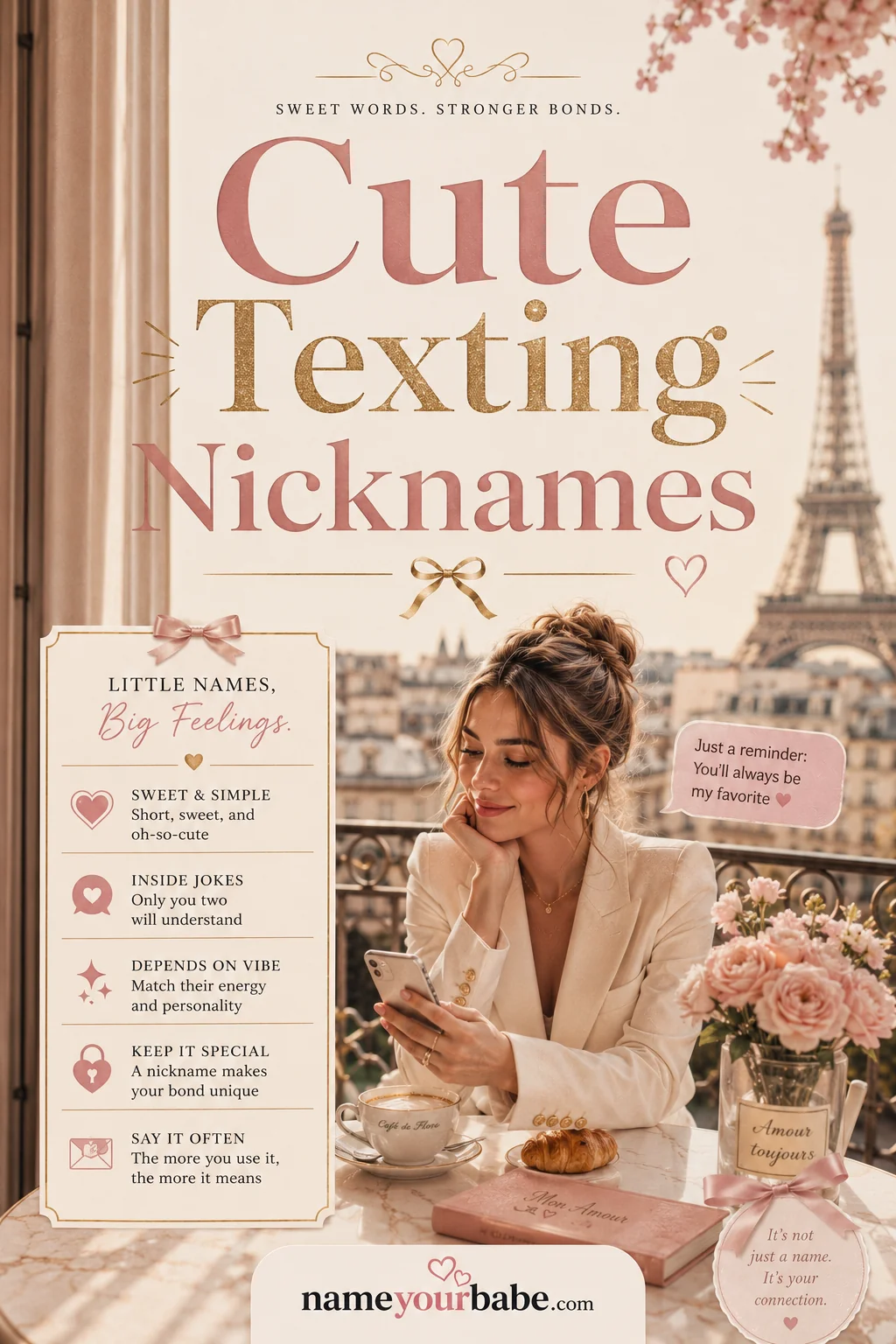
Terms of Endearment: The Complete Guide (Meanings, History & 150+ Examples)

"Terms of endearment" is the proper, umbrella name for all the loving words we use for the people we cherish — sweetheart, darling, honey, babe, and every cousin of theirs. They're one of the oldest and most universal features of human language, found in every culture on earth, and they quietly shape the emotional texture of our closest relationships.
This is the complete guide: what terms of endearment actually are, where they come from, the main types and what they mean, 150+ examples spanning English and the wider world, and how to use them well. Whether you're curious about the words themselves or looking to enrich how you speak to someone you love, here's everything in one place.
What Is a Term of Endearment?
A term of endearment is a word or phrase used to address someone you feel affection for — expressing love, fondness, or closeness. The category is broad: it includes romantic terms (my love, darling), family ones (sweetie, honey, used with children), and even casual-friendly ones (mate, love, hon, used regionally with anyone).
It helps to distinguish two overlapping ideas:
- Terms of endearment — affectionate words that express feeling within speech ("come here, sweetheart"). More universal and timeless.
- Nicknames / pet names — names that replace or play on someone's actual name (Bear, Goober, their initials). More personal and specific.
There's heavy overlap, and "pet name" and "term of endearment" are often used interchangeably. But broadly: terms of endearment are the shared, traditional vocabulary of love; pet names are the personal, often invented ones. Most couples use plenty of both.
A Brief History
Terms of endearment are ancient. The instinct to call a loved one something tender appears across recorded history:
- "Sweetheart" dates to the 13th century — originally "sweet heart," describing a beloved's nature.
- "Darling" comes from Old English dēorling, "little dear one," over a thousand years old.
- "Honey" as affection appears in English by the 1300s, and the sweetness-as-love link is far older still.
- Latin lovers used mel (honey) and deliciae (delight); the Romans were calling partners versions of "my honey" two thousand years ago.
- Shakespeare sprinkled endearments throughout his work — "chuck," "sweeting," "my love."
The deep lesson of this history: terms of endearment endure because they answer a permanent human need — to mark, in a word, that someone is precious to us. The specific words drift across centuries, but the impulse never does.
The Main Types of Terms of Endearment
Terms of endearment cluster into recognizable families:
The classics: Sweetheart, Darling, Dear, Honey, Love, Sweetie, Dearest, Beloved. Timeless, versatile, never wrong.
The "my ___" declarations: My Love, My Heart, My Person, My Everything, My World, My Soul. They state someone's place in your life.
The sweet/food names: Honey, Sugar, Cupcake, Sweet Pea, Muffin, Pumpkin, Dumpling. Affection through sweetness — a near-universal human pattern.
The cute/animal names: Bear, Bunny, Kitten, Lovebug, Dove, Chickadee. Tenderness via the warmth we feel toward small, sweet creatures.
The compliment-names: Handsome, Gorgeous, Beautiful, Stunning, Champ. Affection that also affirms.
The royal/elevated names: Queen, King, Princess, Angel, Goddess, Treasure. Putting the beloved on a pedestal.
The playful/funny names: Goober, Trouble, Goofball, Weirdo. Love expressed through affectionate teasing.
The international treasures: Mi Amor, Mon Chéri, Habibi, Schatz, Jaan, Tesoro. Every language's own words for the beloved.
150+ Terms of Endearment (The Big List)
English classics: Sweetheart, Darling, Dear, Dearest, Honey, Hon, Love, My Love, Sweetie, Sweets, Babe, Baby, Boo, Angel, Beloved, Treasure, Precious, Lovely, Sugar, Cupcake, Sweet Pea, Pumpkin, Buttercup, Muffin, Dumpling, Bear, Teddy, Bunny, Kitten, Lovebug, Dove, Cutie, Cutie Pie, Doll, Poppet, Gorgeous, Handsome, Beautiful, Stunning, Queen, King, Princess, Prince, My Heart, My Person, My Everything, My World, My Soul, My Home, My One, My Forever, My Always, My Whole Heart, Goober, Trouble, Sunshine, Starlight, Wildflower, My Girl, My Man, My Guy, Lovey, Snookums, Pookie, Bub, Boo Bear...
From around the world: Mi Amor, Mi Vida, Cariño (Spanish) · Mon Amour, Mon Cœur, Ma Chérie, Mon Chou (French) · Amore, Tesoro, Cara, Dolcezza (Italian) · Schatz, Liebling, Mausebär (German) · Solnyshko, Zaika, Dusha Moya (Russian) · Habibi, Hayati, Albi (Arabic) · Jaan, Jaaneman, Meri Jaan (Hindi) · Jagiya, Aein (Korean) · Mahal, Sinta (Tagalog) · Canım, Aşkım (Turkish) · Ku'uipo, Ke Aloha (Hawaiian) · Agápi Mou (Greek) · Mo Chuisle (Irish) · and a hundred more.
For deep dives into any language, see our pet names from around the world global tour.
How to Use Terms of Endearment Well
A few principles that apply across all of them:
Match the term to the moment. Sweet terms for tender moments, playful ones for fun, the heavyweight "my forever" for occasions that earn it. A term that fits the moment lands; one that clashes (a goofy name in a serious moment) deflates.
Vary your vocabulary. Using the exact same term forever can flatten it into background noise. A small rotation — a daily one, a sweet one, a playful one, a special-occasion one — keeps each term vivid. The contrast is what gives them charge.
Mean it. A term of endearment is only as warm as the intention behind it. Said on autopilot, "sweetheart" is filler; said while actually present and looking at them, it's a small gift. Sincerity is the entire engine.
Mind the audience. Some terms (honey, darling) work anywhere; others (the soft or silly ones) are for private moments. Read the setting — a name perfect at home might land differently in front of friends.
Let them have a say. The best terms are ones both people enjoy. If a partner doesn't love one, swap it — there are thousands. (See our guide on what to do when your partner doesn't like a pet name.)
Why Terms of Endearment Matter
In the end, terms of endearment are tiny, repeated acts of love — small words that carry an outsized emotional weight. Each "sweetheart" or "my love" or "habibi" is a micro-deposit of affection, a quiet reminder that someone is precious. Said dozens of times a day across years, they become part of the very fabric of a relationship — the warm background hum of being loved and known.
They're also a thread connecting us to all of human history: when you call someone "darling," you join an unbroken line of lovers stretching back a thousand years, all reaching for words tender enough to hold how they feel. That's the quiet beauty of these little words — they're ancient, universal, and brand-new every time you mean them. Use them freely, vary them warmly, and let them do their gentle, powerful work.
Keep Exploring
Frequently Asked Questions
What is a term of endearment?
A term of endearment is a word or phrase used to address someone you feel affection for — expressing love, fondness, or closeness, like "sweetheart," "darling," or "my love." The category spans romantic, family, and even casual-friendly uses, and overlaps heavily with "pet names." Broadly, terms of endearment are the shared traditional vocabulary of love; pet names are the more personal, invented ones.
What are the most common terms of endearment?
The timeless classics top the list: Sweetheart, Darling, Honey, Dear, Love, Babe, Sweetie, and Beloved. Modern favorites include "babe," "my love," and "my person." Across cultures, near-universal patterns appear — terms meaning "my life/soul," sweet-and-food names, and tender diminutives show up in language after language.
Where do terms of endearment come from?
They're ancient. "Sweetheart" dates to the 13th century, "darling" to Old English (dēorling, "little dear one"), and "honey" appears as affection by the 1300s. The Romans used mel (honey) two thousand years ago. They endure because they answer a permanent human need — to mark, in a word, that someone is precious.
What's the difference between a term of endearment and a nickname?
A term of endearment is an affectionate word expressed within speech ("come here, darling") and tends to be universal and traditional. A nickname or pet name replaces or plays on someone's actual name (Bear, Goober) and is more personal and often invented. There's heavy overlap, and most couples use plenty of both.
How do I use terms of endearment well?
Match the term to the moment (sweet for tender, playful for fun), vary your vocabulary so they don't go stale, mean them (sincerity is everything), mind the audience (some are private), and make sure both partners enjoy them. A small rotation used with genuine warmth beats one term said on autopilot.
Why do terms of endearment matter in a relationship?
They're tiny, repeated acts of love — micro-deposits of affection that, said dozens of times a day across years, become the warm background hum of a relationship. They mark someone as precious, build intimacy through routine, and connect us to a thousand years of human history. Small words, outsized emotional weight.
This is the whole world of terms of endearment in one place — ancient, universal, and yours to use freely. For terms matched to your love, the pet name generator sorts them by vibe in seconds.