The Psychology of Pet Names: Why Couples Use Them (& Why It Works)
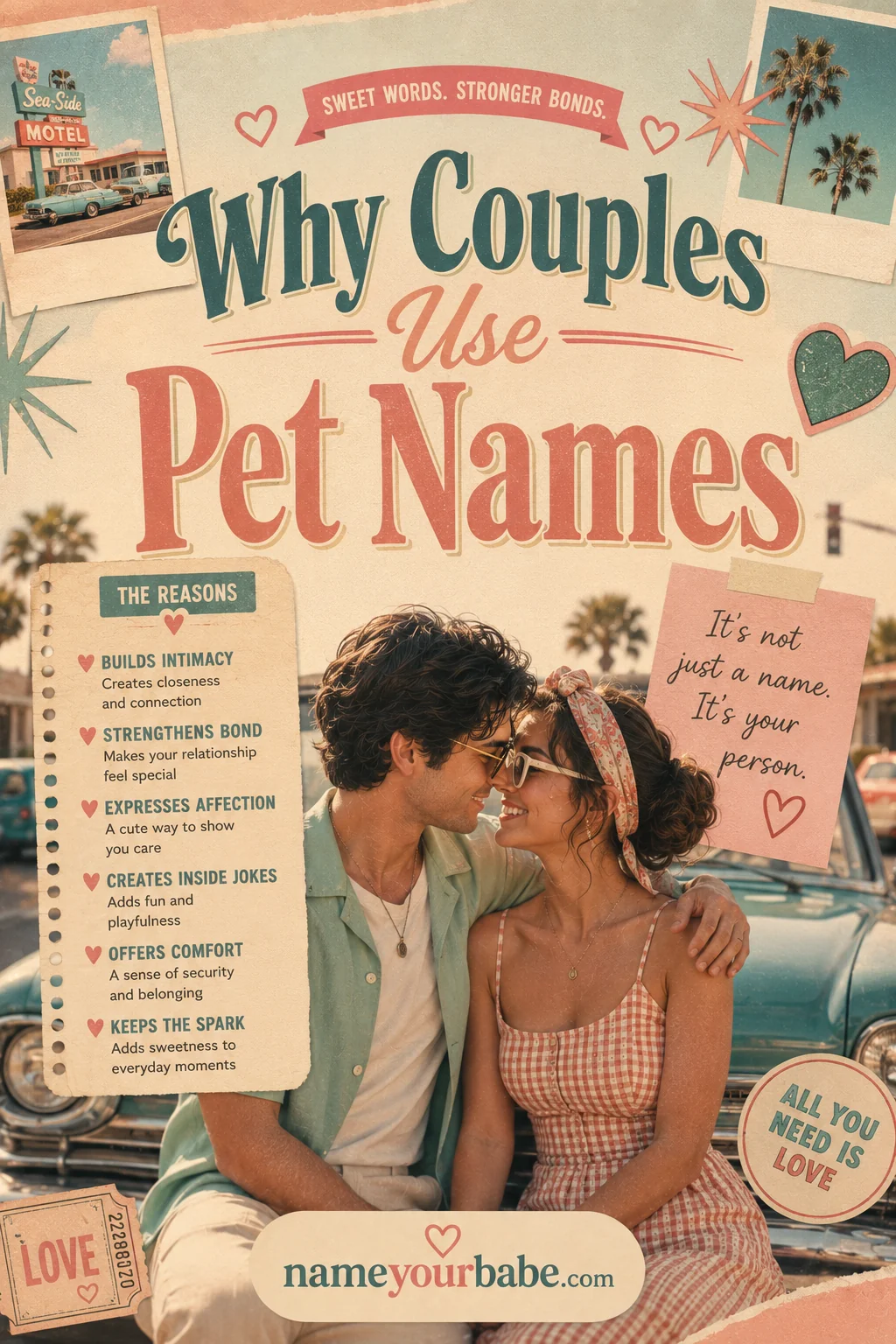
Why do we do it? Why do otherwise dignified adults call each other "Pookie," "Bear," and "Boo"? Why does nearly every couple, in every culture, develop a private vocabulary of silly and sweet names for each other? It turns out there's real psychology behind pet names — and it reveals something genuinely lovely about how human bonding works.
This guide digs into the science and psychology of pet names: what they signal, how they bond couples, why the silly ones matter as much as the sweet ones, and what relationship research has found about couples who use them. If you've ever wondered why "I love you, you giant goober" feels so right, here's the answer.
Pet Names Are a Sign of a Healthy Relationship
Let's start with the headline finding: research on couples consistently associates pet-name use with relationship satisfaction. Studies looking at couples' communication have found that partners who use nicknames and a shared private language tend to report higher levels of happiness and closeness in their relationships.
One often-cited line of research found that the presence of a private vocabulary — including pet names, inside jokes, and made-up words — correlated with relationship satisfaction, especially in the earlier years. The takeaway isn't that saying "babe" magically fixes a relationship; it's that pet names are a marker of the kind of intimacy, playfulness, and connection that healthy relationships have. They're both a symptom and a small cause of closeness.
So if you and your partner have a pile of ridiculous names for each other, that's not immaturity — it's a quiet sign that something is going right.
The Five Psychological Functions of Pet Names
Pet names do real work in a relationship. Psychologically, they serve several functions:
1. They create a private world. A pet name is a tiny secret language. "Babe" might be public, but "Beans" or "my little gremlin" belongs to just the two of you. This shared private vocabulary builds a sense of us against the world — an exclusive bond that outsiders aren't part of. Couples with rich private languages feel more like a unit.
2. They signal safety and acceptance. Using a soft, silly, or vulnerable pet name — and having it received warmly — is a small act of trust. Calling someone "Pookie" requires letting your guard down, and them accepting it says "I accept this softer, sillier side of you." Every exchange of a tender nickname is a micro-confirmation: we're safe with each other.
3. They regulate emotion and defuse tension. Pet names can lower the temperature in a relationship. It's genuinely hard to stay angry at someone who calls you by your goofy nickname mid-argument. Research on conflict suggests that affectionate "repair attempts" — and a pet name is a classic one — help couples recover from disagreements. "Come on, Bear" can do what a paragraph of apology can't.
4. They maintain the bond through routine. A pet name said dozens of times a day is a constant, low-effort reaffirmation of affection. Each "morning, sunshine" or "love you, babe" is a tiny deposit in the relationship's emotional bank account. They keep the connection warm in the spaces between big romantic moments — and relationships largely live in those small spaces.
5. They carry shared history. Over time, a pet name accumulates meaning. The nickname from your third date, the one that mutated over years, the inside-joke name — each becomes a little container of your story together. Saying it invokes everything that came before. Old pet names are a relationship's memory, spoken aloud.
Why the Silly Names Matter (The "Baby Talk" Effect)
Here's something that surprises people: the silly, baby-talk-ish pet names ("snookums," "boo-boo," "my little potato") may be psychologically important precisely because they're ridiculous.
Researchers who study couple communication note that the playful, regressive, baby-talk register that couples slip into — silly voices, nonsense names, exaggerated cuteness — recreates some of the earliest bonding experiences humans have: the warm, safe, playful communication between a caregiver and an infant. It taps into deep attachment systems. That's not childish; it's the brain using its oldest, most powerful bonding tools.
This is why secure, happy couples are often the silliest in private. The ability to be that unguarded, that playful, that gloriously undignified with each other is a sign of deep safety. The couple calling each other "Mr. Bingus" and "Lady Snacksington" isn't failing to be romantic — they're accessing one of the most fundamental forms of human closeness there is.
What Pet Names Say About Your Specific Relationship
Beyond the universal psychology, the kind of pet names a couple uses reveals their particular dynamic:
- Mostly sweet/romantic names (my love, my heart) → a relationship that leans tender and emotionally expressive
- Mostly funny/silly names (goober, gremlin) → a bond built heavily on humor and play
- Lots of names in rotation → a playful, creative relationship that enjoys its own private culture
- Compliment-names (gorgeous, handsome) → partners actively affirming each other
- One steady name (always "babe") → comfortable, low-key, settled affection
- Deeply weird/private names → high security and a strong sense of "us"
None of these is better than another — they're just different flavors of connection. But noticing your own pattern can be illuminating: it's a little mirror of how your relationship actually works.
The Takeaway: Pet Names Are Tiny Acts of Intimacy
Strip away the science and here's the heart of it: a pet name is one of the smallest, most repeated acts of intimacy two people can share. It's a word that means "you're special to me, you're mine, and I see a side of you no one else does." Said dozens of times a day, it quietly stitches a relationship together.
That's why nearly every couple, everywhere, invents them. We're wired for this — for private languages, for playful bonding, for the safety of being someone's "Bear." If you're in a relationship without many pet names and you'd like more of that warmth, the good news is it's easy to start: pick a name, try it in a soft moment, and let it grow. And if you've got a whole ridiculous rotation already, take heart — the psychology says you're doing something deeply, beautifully right.
So go ahead and call them something silly tonight. Your brain — and theirs — knows exactly what it means.
Keep Exploring
Frequently Asked Questions
Why do couples use pet names?
Psychologically, pet names serve several functions: they create a private "us-against-the-world" language, signal safety and acceptance, defuse tension during conflict, maintain the bond through daily repetition, and carry shared history. They're both a sign of intimacy and a small cause of it — which is why nearly every couple in every culture develops them.
Are pet names a sign of a healthy relationship?
Research consistently associates pet-name use and shared private vocabulary with higher relationship satisfaction, especially in earlier years. Pet names aren't a magic fix, but they're a marker of the playfulness, intimacy, and connection that healthy relationships have. A couple with a pile of silly names for each other is usually doing something right.
Why do couples use silly baby-talk nicknames?
Because the playful, baby-talk register taps into deep human attachment systems — it recreates the warm, safe, playful communication between caregiver and infant, one of our most fundamental bonding experiences. That's why secure, happy couples are often the silliest in private; being that unguarded is a sign of deep safety, not immaturity.
Do pet names actually help during arguments?
Yes — affectionate "repair attempts" help couples recover from conflict, and a pet name is a classic one. It's genuinely hard to stay angry at someone who calls you by your goofy nickname mid-disagreement. "Come on, Bear" can lower the emotional temperature in a way a long explanation can't, signaling "we're still us" even mid-fight.
What do our pet names say about our relationship?
The pattern reveals your dynamic: mostly sweet names suggest a tender, expressive bond; mostly funny ones suggest a relationship built on humor; many names in rotation suggest a playful, creative couple; compliment-names suggest partners who actively affirm each other. None is better than another — they're just different flavors of connection.
What if my partner and I don't use pet names — is that bad?
Not necessarily; some happy couples simply prefer names or other forms of affection. But if you'd like more of that warmth, it's easy to start: pick a name, try it in a relaxed moment, and let it grow naturally. Pet names are a low-effort, high-reward way to add small daily intimacy — and the psychology says they genuinely work.
The science is clear: pet names are tiny, powerful acts of intimacy. Want to start or refresh yours? The pet name generator finds names matched to your partner's vibe in seconds.