Vintage Terms of Endearment: 80+ Old-Fashioned Names Worth Reviving
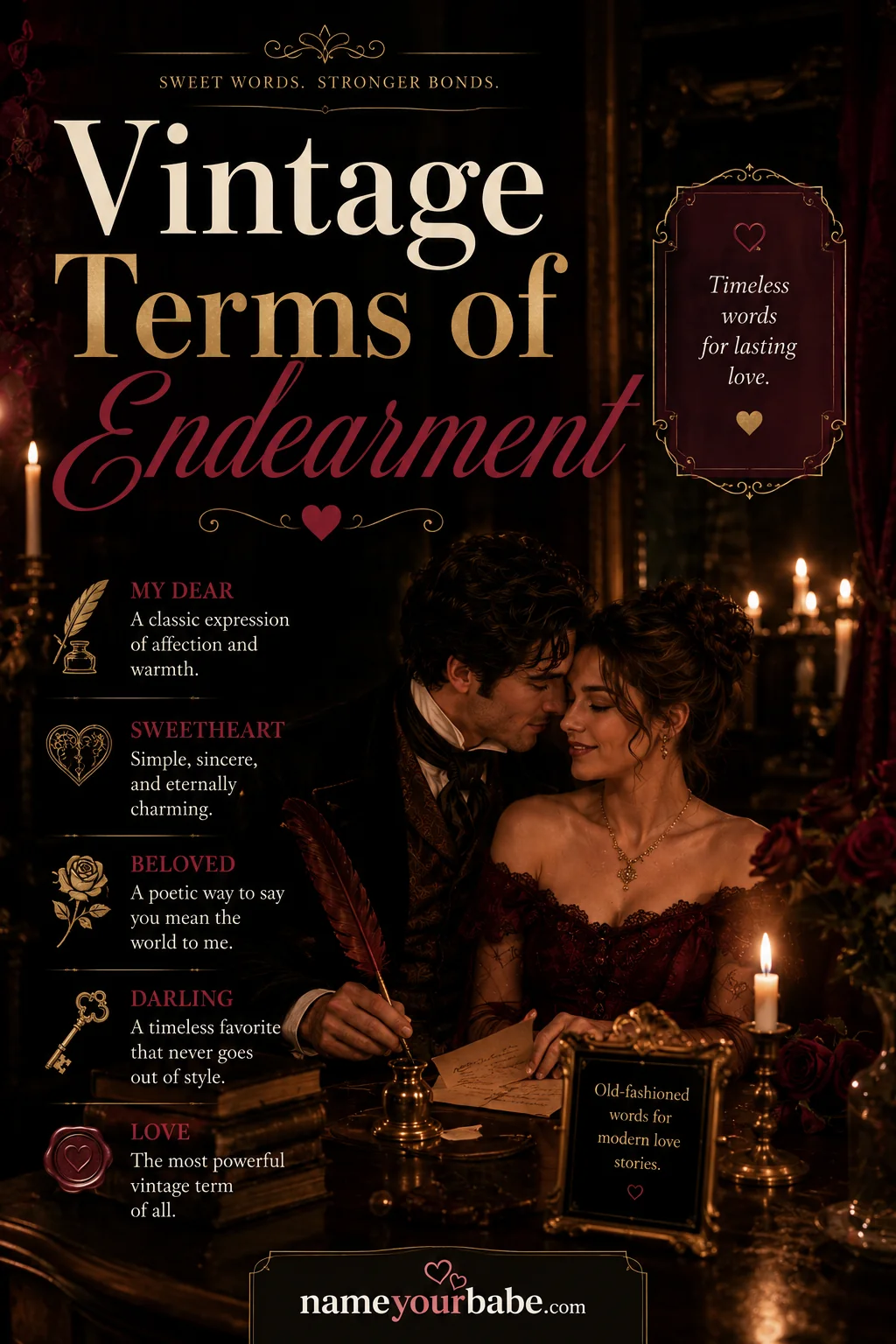
There's a particular magic in old-fashioned terms of endearment — the words that filled love letters from the front, that lovers murmured at soda fountains, that your grandparents called each other for sixty years. They carry a romance the modern "babe" can't quite match: a sense of ceremony, of an era when affection was spoken a little more sweetly and a little more bravely.
The wonderful news is that these vintage gems never stopped working — we just stopped using them. This guide gathers 80+ vintage terms of endearment from across the decades, each with a note on its era and charm, all waiting to be revived. Because "Dreamboat" lands on a modern partner like it was minted yesterday, and almost nobody else is using it.
The Timeless Classics (Pre-1900s, Still Perfect)
The oldest endearments, worn smooth by centuries and still lovely:
- Sweetheart — 13th century; "sweet heart," and it never aged
- Darling — from Old English "little dear one," a thousand years strong
- Dearest — the letter-writer's superlative
- Dear Heart — Victorian tenderness
- Beloved — solemn and beautiful
- My Treasure — the precious-thing endearment
- Sweeting — genuinely medieval, genuinely sweet
- Turtledove — the original lovebird (Biblical, even)
- My Jewel — old-form treasure
- Precious — never went out of style
The Jazz-Age Tier (1920s)
The Roaring Twenties invented modern flirtation, and the slang still sparkles:
| Vintage term | The 1920s vibe |
|---|---|
| Sheik | The irresistible man (blame Valentino) |
| Sheba | The irresistible woman |
| Daddy-o | Cool-cat affection |
| Sport | Gatsby's own; breezy charm |
| The Bee's Knees | "You're the bee's knees" — the best |
| The Cat's Pajamas | Equally absurd superlative |
| Hotsy-Totsy | Perfect, pleasing, fun to say |
| Sweetie Pie | Born in this era, still adorable |
| Lovey-Dovey | The cooing classic |
| My Fella / My Gal | Possessive and warm |
"My fella" and "my gal" are sleeper revivals — warm, slightly conspiratorial, and they sound like you're about to share a malted milkshake. Highly recommended for everyday use.
The Wartime Tier (1940s)
The decade of love letters home perfected the tender address:
- Sweetheart — every letter opened with it
- Darling — wartime correspondence royalty
- My Guy / My Gal — the home-front classics
- Honey Pie — sweetness compounded
- Sugar — soda-fountain warmth
- Dreamboat — wait, that's 1950s — but the longing was wartime
- Sugarfoot — dance-hall sweetness
- My Darling — the letter-signature standard
- Angel — the one waiting at home
- My Sweet — simple wartime tenderness
There's a weight to wartime endearments — they were written by people who meant every word and might not get to say another. Borrowing "Dearest" or "My Darling" borrows a little of that depth. Use them when you want to mean it.
The Mid-Century Tier (1950s)
Peak Americana — the sock-hop and soda-fountain vocabulary:
- Dreamboat — the era's masterpiece; retro-swoon perfected
- Heartthrob — matinee-idol energy
- Doll / Dollface — diner-counter charm
- Good-Lookin' — "hey, good-lookin'" (Hank Williams, 1951)
- Hot Rod — for the one with the need for speed
- Cool Cat — the highest compliment available
- Steady — "my steady," going-steady made nominal
- Bombshell — for the glamorous one
- Cupcake — sweet and wholesome
- Honeybun — diner-counter devotion
"Dreamboat" and "my steady" are the crown jewels of revival here — "Dreamboat" is pure swoon, and "my steady" is commitment phrased as fact, with no modern equivalent. "This is my steady" at a party will charm everyone, your partner most of all.
The "Grandma & Grandpa" Tier (The Cozy Classics)
The warm, lived-in names of long marriages past:
- Lovey — soft and unguarded
- Honeybunch — grandparent-certified, undefeated
- Sugar Pie — dessert-grade devotion
- Pumpkin — cozy and timeless
- Sweet Pea — garden-fresh
- Ol' [name] — affectionate familiarity
- My Bride / My Groom (decades in) — keeping the wedding glow
- Mother / Father (old-couple style) — the way some long-married couples addressed each other
- Dear — the cardigan of endearments
- Sweetie — gentle and enduring
How to Revive a Vintage Term (Without Irony)
Bringing back an old-fashioned endearment takes a little technique:
Commit completely. Vintage terms die when said with air quotes. "Dreamboat" works because you say it straight — the name carries its own gentle wink; it doesn't need yours. Deliver it like it never left circulation, and it lands as charming, not ironic.
Match the era to their soul. Every partner has a native decade. The sharp dresser is a '50s "Dreamboat"; the witty one is a '20s "Sport"; the letter-writer is a '40s "Dearest"; the old soul is a Victorian "Dear Heart." A well-matched vintage name feels like recognition, not costume.
Pair it with a period gesture (optional but delightful). "Dreamboat" plus a slow kitchen dance; "Dearest" at the top of an actual handwritten note; "my steady" while sharing a milkshake with two straws. The name summons an era — let a little of the era come along, and the romance doubles.
Tell them the history. The deluxe move: share the backstory. "'Sheik' is what flappers called an irresistible man — from a Valentino movie. Anyway, that's you." The name plus its provenance becomes a tiny museum exhibit about how long people have been feeling what you feel.
Why Vintage Terms Are Worth Reviving
Here's the case for raiding the past: vintage terms of endearment have survivorship strength. These words have already outlived their inventors, their eras, and every trend since — they kept working because they were built from the permanent materials of love: admiration, warmth, devotion, a little wit. A word that's charmed people for a hundred years has proven it works directly on the human heart.
They also offer something rare in a world where everyone says "babe": distinction. Call your partner "Dreamboat" or "my steady" and you're giving them a name almost no one else is using — one that sounds like a love song, that carries the romance of a more ceremonious age, that makes an ordinary Tuesday feel a little like a black-and-white film.
So raid the past freely. Somewhere in the love letters and soda fountains and sixty-year marriages of history is a vintage term that fits your partner perfectly — and reviving it is a small, lovely act of romance. The words are waiting; they've been waiting a hundred years. Well, hello there, Dreamboat.
Keep Exploring
Frequently Asked Questions
What are vintage terms of endearment?
Old-fashioned loving names from past eras: timeless classics (Sweetheart, Darling, Dear Heart), jazz-age slang (Sheik, Sport, My Fella), wartime tenderness (Dearest, My Darling), mid-century charm (Dreamboat, My Steady, Doll), and cozy grandparent-era names (Honeybunch, Sugar Pie). They never stopped working — we just stopped using them.
What did couples call each other in the 1950s?
Dreamboat and Heartthrob led the swoon vocabulary, with "my steady" as the going-steady term, plus Doll, Dollface, Good-Lookin' (Hank Williams, 1951), Cool Cat, and Honeybun. The era perfected soda-fountain romance, and its whole catalog revives beautifully on a modern partner.
What's a good old-fashioned pet name worth bringing back?
"Dreamboat" (pure 1950s swoon), "my steady" (commitment phrased as fact, no modern equivalent), "my fella/my gal" (warm 1920s charm), and "Dearest" (the letter-writer's classic) all revive wonderfully. They sound like love songs and almost nobody else is using them, which is exactly their appeal.
How do I use a vintage term without sounding ironic?
Commit completely — deliver "Dreamboat" straight, like it never left circulation. Vintage terms die under air quotes but charm when said sincerely; they carry their own gentle wink. Match the era to your partner's personality (sharp dresser = '50s, witty = '20s), and the name reads as recognition rather than costume.
Why do old-fashioned terms of endearment still work?
They have "survivorship strength" — they've outlived their inventors, their eras, and every trend since, because they were built from love's permanent materials: admiration, warmth, devotion, wit. A word that's charmed people for a century has proven it works directly on the human heart, no cultural context required.
What's a vintage term of endearment for a long marriage?
The cozy grandparent-era names fit beautifully: Honeybunch, Sugar Pie, Lovey, Dear, and Sweet Pea, plus "my bride/my groom" to keep the wedding glow decades in. There's a sweet move, too, in reviving the name you used as newlyweds — calling her "Doll" at the golden anniversary the way you did at 22.
Raid the past freely — somewhere in history's love letters is a vintage term that fits your partner perfectly. For old-fashioned picks matched to your love, the pet name generator's Classic mode is stocked with charm.