British Terms of Endearment: 70+ Lovely (& Quirky) UK Names With Meanings
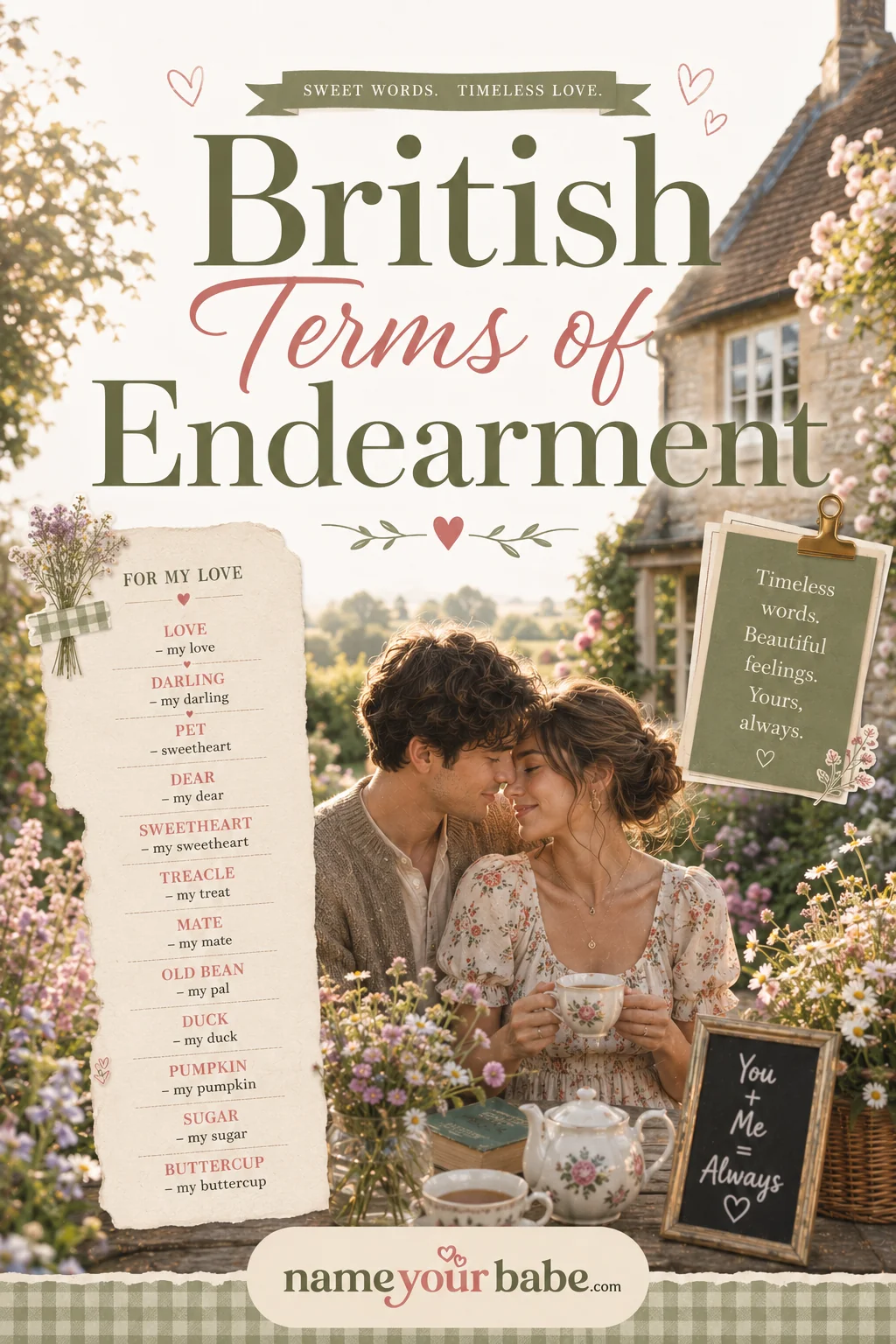
British terms of endearment are a particular delight — charming, often regional, and gloriously casual. In Britain, "love" gets sprinkled on everyone from your partner to the bus driver, a Yorkshireman might call you "duck," and a Scot will warm your heart with "hen" or "ma wee dote." It's a whole landscape of affection, equal parts romantic and everyday, with accents and regions giving each term its own flavor.
This guide gives you 70+ British terms of endearment, each with its meaning and regional origin where relevant, so you can sprinkle a little UK charm into your love. Whether your partner is British, you adore the accent, or you just want something with cozy cross-the-pond character, here's how to talk love the British way — love, pet, duck, and beyond.
The Classic British Endearments
The warm, widely-used UK terms:
- Love (or "luv") — the ultimate British endearment; used for partners AND strangers
- Darling — elegant and warm
- Dear — gentle and classic
- Sweetheart — tender and timeless
- Poppet — adorable, for a sweet small one
- Treasure — "you're a treasure"
- Pet — affectionate (especially Northern England)
- Babe / Babes — modern and casual
- My Love — the romantic upgrade
- Sweetie — friendly warmth
"Love" (or "luv") is the quintessential British term — and the gloriously casual thing is that Brits use it for everyone: your partner, the shopkeeper, a passing stranger. "Alright, love?" is a national greeting. For a partner it's warm and genuine; its universality is part of British charm, not a lessening of the affection.
The Regional Gems (Where It Gets Charming)
Britain's regions each have their own beloved endearments — this is where it gets wonderful:
| Term | Region | Meaning |
|---|---|---|
| Duck / Me Duck | Midlands (Derby, Stoke) | Dear/love (genuinely sweet!) |
| Pet | Northeast (Geordie) | Dear/love |
| Hen | Scotland | Dear/love (for women) |
| Hinny | Northeast | Honey/dear |
| Chuck | Northern England | Dear (Shakespearean roots!) |
| Bab / Babby | Birmingham | Baby/dear |
| Cock / Me Old Cock | Northern (older) | Friend/dear (affectionate!) |
| Lovie / Lovey | General | Love |
| Flower | Northern England | Dear (sweet for women) |
| My Lover | West Country (Bristol) | Dear (NOT what it sounds like!) |
The regional terms are pure charm. "Duck" (or "me duck") in the Midlands is a genuinely sweet, everyday endearment — possibly from "duke," not the bird. "My lover" in the West Country sounds scandalous to outsiders but is a completely normal, friendly term used for anyone. And "chuck" has Shakespearean roots (Macbeth calls Lady Macbeth "chuck"). Each region's term is a little badge of local identity.
The Cute & Quirky Tier
The delightfully British affectionate oddities:
- Poppet — sweet for a small/dear one
- Pumpkin — cozy (shared with Americans)
- Petal — lovely and delicate (Northern)
- Sausage — "you silly sausage!" (affectionate, very British)
- Munchkin — cute for a little one
- Dafty — "you dafty" (affectionate Scottish for "silly one")
- Numpty — affectionate "silly one" (Scottish)
- Pickle — "you little pickle" (cheeky-affectionate)
- Trouble — "hello, trouble"
- Bonnie Lass / Bonnie Lad — Scottish, "beautiful girl/boy"
"Silly sausage" and "you pickle" capture British affection perfectly — warm, teasing, never too serious. The Brits excel at the loving insult, calling someone a "dafty" or "numpty" (silly one) with total fondness. It's affection through gentle, characterful teasing.
The Romantic & Sincere Tier
When a Brit gets genuinely romantic:
- My Love — the heartfelt classic
- My Darling — tender devotion
- My Dearest — old-fashioned and sincere
- My Sweetheart — warm and true
- My Treasure — precious
- My Everything — full romance
- My One — certainty
- My Bonnie — Scottish, "my beautiful one"
- My Beloved — the heavyweight
- My Better Half — fond and classic
How to Use British Terms of Endearment
A few notes:
Embrace the casualness of "love." The most British thing about "love" is how casually it's deployed — to partners and strangers alike. For your actual partner, "love" or "my love" is warm and genuine; just know that its everyday use elsewhere doesn't cheapen it. British affection is often understated and woven into ordinary speech rather than declared grandly, and that low-key warmth is its own charm.
Lean into the regional character. If you or your partner has roots in a particular British region, the local term is a lovely nod — "duck" for the Midlands, "pet" for the Northeast, "hen" or "bonnie" for Scotland. These regional endearments carry local pride and identity. Using the right one for someone's home region is a sweet, knowing gesture.
Master the loving insult. British affection genuinely runs on gentle teasing — "you silly sausage," "you daft thing," "you numpty," "alright, trouble?" These warm insults are deeply affectionate in British culture; calling your partner a "pickle" or "dafty" with a smile is peak UK endearment. Don't read them as harsh; the teasing is the tenderness.
Mind the "my lover" trap (and enjoy it). If you're in or near the West Country (Bristol, Somerset), "my lover" is a completely normal, friendly term for anyone — but it's gloriously confusing to outsiders. It's a fun bit of British regional charm worth knowing. Most British terms, though, are perfectly intuitive — and many ("darling," "sweetheart," "dear") are shared warmly across the English-speaking world.
British terms of endearment are charming, casual, and full of regional character — from the universal "love" to the sweet Midlands "duck" to the affectionate "silly sausage." They reflect a culture that weaves warmth into everyday speech and shows love through gentle teasing as much as grand declaration. Pick one, deploy it with a bit of British understatement, and bring some cross-the-pond charm to your love. Alright, love?
British vs. American: A Tale of Two Affections
It's worth a moment on how British endearment differs from American — because the contrast reveals what makes the British style so charming:
Americans tend toward the effusive; Brits toward the understated. Where an American might go big with "babe," "sweetie pie," and gushing affection, the British style is often drier, more woven-into-the-everyday. A British "alright, love?" carries genuine warmth precisely because it's casual and unshowy. Understatement is the British love language.
Brits use endearments more publicly and universally. "Love," "pet," "duck," and "darling" get sprinkled on strangers, shopkeepers, and bus drivers across Britain — something that would seem oddly forward in much of America. This universality isn't a lessening of affection; it's a cultural warmth that treats everyone with a little casual care.
The British loving-insult is a genre of its own. "You silly sausage," "you numpty," "you daft thing" — affectionate teasing is far more central to British endearment than American. Americans lean sincere; Brits show love through gentle mockery as much as through sweet words. To a Brit, being called a "pickle" or a "wally" with a smile is genuine tenderness.
Regional pride runs deep. America has some regional terms (Southern "sugar," "darlin'"), but Britain's regional endearments — duck, pet, hen, bonnie, my lover — are unusually strong markers of local identity, each tied to a specific place.
The charm of British endearment, in the end, is its unpretentiousness. It doesn't need grand declarations; it weaves love into "alright, love?" and "you daft sausage" and a casual "darling" over tea. There's something deeply warm in that — affection so comfortable it doesn't have to announce itself. Whether you adopt the universal "love," a regional "duck," or a teasing "silly sausage," you're borrowing a style of love that's cozy, characterful, and refreshingly down-to-earth.
Keep Exploring
Frequently Asked Questions
What are British terms of endearment?
The classics: Love (or "luv," the quintessential one), Darling, Dear, Sweetheart, and Poppet. Plus charming regional gems: Duck (Midlands), Pet (Northeast), Hen (Scotland), and Flower (Northern England). British affection is casual, often regional, and frequently expressed through gentle teasing like "silly sausage."
Why do British people call everyone "love"?
"Love" (or "luv") is Britain's ultimate casual endearment, used warmly for partners and strangers alike — "Alright, love?" is practically a national greeting. Its universality is part of British charm, not a lessening of affection. For your actual partner, "love" or "my love" is warm and genuine; the everyday use elsewhere doesn't cheapen it.
What does it mean when a British person calls you "duck"?
"Duck" (or "me duck") is a genuinely sweet term of endearment in the English Midlands (Derby, Stoke) — likely derived from "duke," not the bird. It's an everyday affectionate term, equivalent to "dear" or "love." Regional British endearments like this carry warm local identity.
Is "my lover" really a normal British term?
Yes — in the West Country (Bristol, Somerset), "my lover" is a completely normal, friendly term used for anyone, not just a romantic partner. It sounds scandalous to outsiders but is innocent regional charm. It's one of the more delightfully confusing British endearments for visitors.
Why do Brits use insults as terms of endearment?
British affection genuinely runs on gentle teasing — "you silly sausage," "you numpty," "you daft thing," "alright, trouble?" These loving insults are deeply affectionate in UK culture; the teasing is the tenderness. Calling your partner a "pickle" or "dafty" with a smile is peak British endearment, not harshness.
Are British terms of endearment regional?
Many are — and that's part of their charm. Duck (Midlands), Pet and Hinny (Northeast), Hen and Bonnie (Scotland), Flower (Northern England), and Bab (Birmingham) all carry local identity. The classics — love, darling, sweetheart, dear — are universal across Britain and shared warmly across the English-speaking world.
Sprinkle a little UK charm into your love — the universal "love," a regional "duck" or "pet," or an affectionate "silly sausage." For warm, timeless names matched to your relationship, the pet name generator's Classic flavor is ready.