When Your Partner Hates the Nickname: What to Do (Without the Drama)
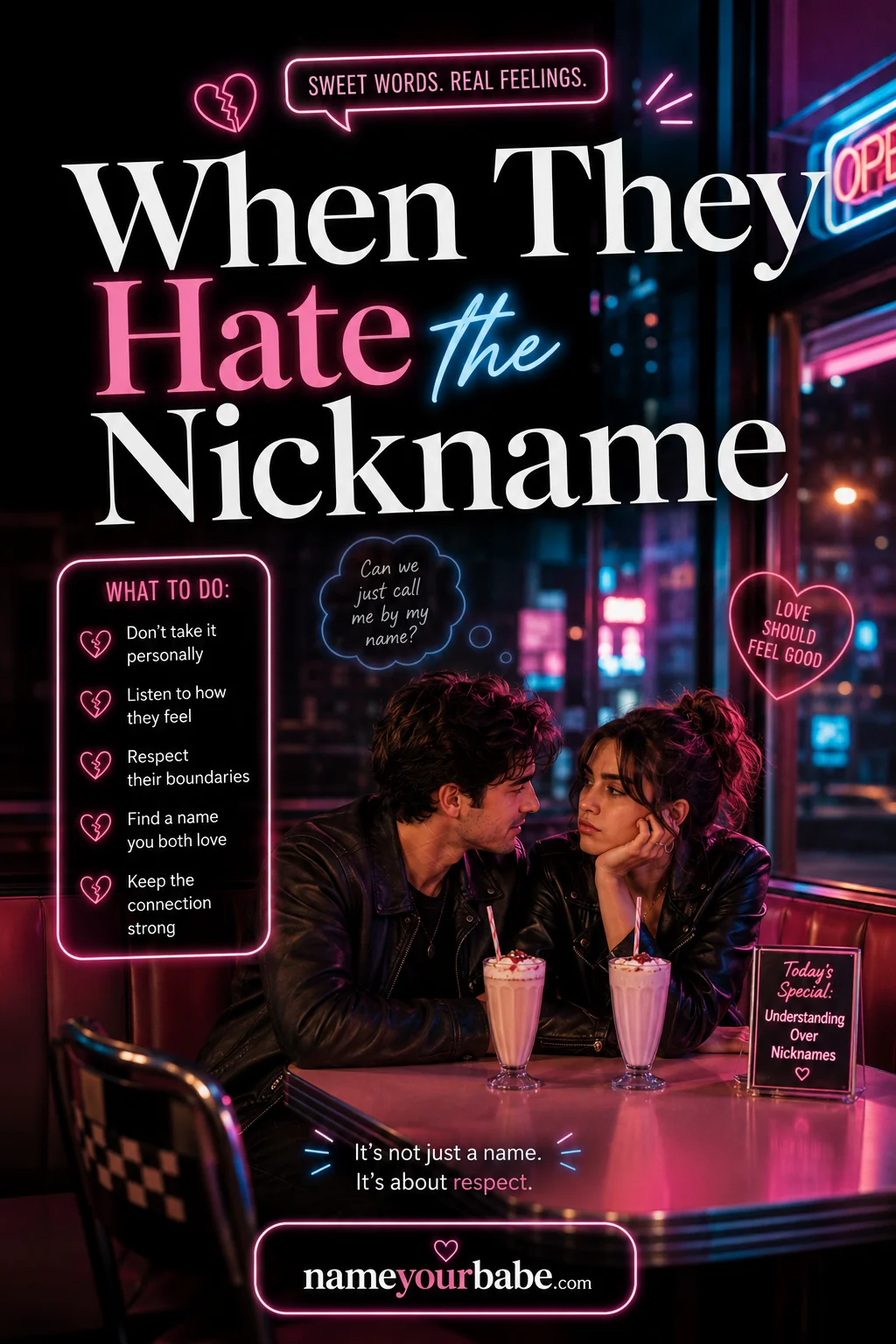
You found what you thought was the perfect pet name — and your partner... doesn't love it. Maybe they winced. Maybe they asked you to stop. Maybe they've just never once responded to it. It can sting a little (you meant it with affection!), but here's the reassuring truth: a partner disliking a nickname is completely normal, totally fixable, and not a sign of anything wrong with your relationship.
This guide walks through exactly how to handle it gracefully — why nickname dislike happens, what to say (and not say), how to find a name you both love instead, and the one thing that matters more than any specific nickname. No drama required.
First: It's Not a Big Deal (Really)
Before anything else, take the pressure off. A disliked pet name is one of the lowest-stakes "problems" a relationship can have. It says nothing about how they feel about you — only about that particular word. Pet names are easily swapped; there are thousands of them, and finding the right one is a fun process, not a crisis.
The only way a disliked nickname becomes an actual issue is if it's handled badly — if you push a name they've asked you to drop, or react to their honesty with hurt feelings that make them feel guilty for speaking up. Handle it well, and this is a non-event. Better than a non-event, actually: it's a small chance to show them you listen.
Why People Dislike Certain Pet Names
Understanding the why makes it easier to fix. Common reasons a partner doesn't like a nickname:
- It hits an insecurity. Even an innocent name can brush against something they're sensitive about (their height, weight, a feature, a past). This is the most important one to catch.
- It has baggage. An ex used it, a family member used it, or it's tied to a bad association they have. The name itself might be fine; its history isn't.
- It feels wrong for their identity. Some people feel "Princess" is too girly, "Daddy" too much, "baby" too infantilizing — it clashes with how they see themselves.
- It's a public-vs-private mismatch. They may love it at home but hate it in front of friends (or vice versa). The name's fine; the setting is the problem.
- It just doesn't resonate. Sometimes there's no deep reason — the name just doesn't feel like them. That's valid too.
Notice that most of these are about the name, not about you or your affection. That reframe makes the whole thing easy to approach.
What to Say (And How to React)
If your partner tells you — or signals — they don't like a nickname, here's the graceful playbook:
React with warmth, not hurt. The most important moment is your reaction. A light "oh, no problem at all — what would you like instead?" makes it safe for them to be honest. If you get visibly wounded, they learn that telling you the truth costs them, which is a much bigger problem than a bad nickname. Take the feedback gracefully and you build trust.
Get curious, not defensive. Ask, gently: "Is it the name, or just in certain situations? Anything you'd actually like to be called?" You might learn it's fine in private but not public, or that there's a name they'd secretly love. Curiosity turns a small rejection into useful information.
Don't make them over-explain. If they don't want to dig into why (maybe it's an ex, maybe it's an insecurity), don't press. "Got it, I'll find something better" is enough. They don't owe you a thesis on their dislike.
Then actually stop. This is the non-negotiable one. Once they've said they don't like a name, retire it — genuinely. Continuing to use it "as a joke" or "because it's cute" after they've objected turns affection into something that feels like it's not about them at all. Dropping it immediately is a small, powerful act of respect.
If You're the One Who Hates Your Nickname
The flip side — maybe you don't like what your partner calls you, and you're not sure how to say so. The same grace applies, pointed inward:
Speak up, kindly and early. It only gets harder to raise the longer you let it slide. A warm, low-stakes "hey, that one doesn't really do it for me — can we find another?" is all it takes. Most partners will happily adjust; they want you to like your nickname.
Lead with an alternative. Instead of just rejecting, redirect: "I'm not loving 'Bunny' — but I'd actually love it if you called me [X]." Giving them a replacement makes it feel collaborative, not critical, and they get the relief of knowing what does work.
Assume good intent. They picked the name with affection. Framing your request as "let's find one that fits even better" rather than "I hate that" keeps the warmth intact. You're not rejecting their love — just fine-tuning its packaging.
Finding a Name You Both Love (The Fun Part)
Here's the silver lining: a disliked nickname is an invitation to find a better one together — and the search itself can be sweet. The approach:
Ask what they'd actually like. The most direct path: "What would you want me to call you?" Some people know instantly; the answer might surprise and delight you. You may discover they've secretly wanted a particular name all along.
Aim at what they're proud of. Pivot from whatever didn't land toward names that celebrate something they like about themselves — their humor, their strength, their kindness, a feature they're confident about. A name aimed at a point of pride almost never misses.
Make it a playful joint project. Try a few out together, laugh at the bad ones, notice which gets a real smile. Building a nickname with someone, rather than assigning one to them, often produces a name that sticks better and means more — because you both chose it.
Let an inside joke do the work. The safest, most beloved names often come from a shared moment rather than a list. A nickname born from something only you two experienced has no baggage, fits perfectly, and belongs entirely to you. Keep an ear out for it.
The One Thing That Matters Most
Strip it all back, and here's the real point: the goal was never a specific nickname — it was making your partner feel loved. If a name does the opposite, it's failed at its only job, and swapping it isn't a loss; it's a course-correction toward the actual goal.
A partner who tells you they don't like a name is giving you information about how to love them better. Received warmly, that's a gift, not a rejection. The couples who handle this gracefully end up closer — because the real message your partner takes away isn't "they picked a bad name." It's "they listened, they adjusted, they cared more about my comfort than their idea." That lesson is worth far more than any perfect pet name.
So if your partner hates the nickname: no drama, no hurt feelings, just a warm "let's find a better one." Then go find it — together. The right name is out there, and the search is half the fun.
Keep Exploring
Frequently Asked Questions
What should I do if my partner doesn't like the nickname I gave them?
Handle it with warmth: react graciously (not hurt), get curious about whether it's the name or the setting, and then actually stop using it. Most importantly, treat it as a chance to find a better name together — ask what they'd like to be called. A disliked nickname is low-stakes and totally fixable; only mishandling it (pushing a rejected name) causes real friction.
Why does my partner hate a pet name I think is cute?
Common reasons: it brushes an insecurity (height, weight, a feature), it has baggage (an ex or family member used it), it clashes with their self-image (too girly, too infantilizing), or it's a public-vs-private mismatch. Often it's nothing deep — the name just doesn't feel like them. Most reasons are about the word, not your affection.
Is it bad if I keep using a nickname my partner asked me to stop?
Yes — this is the one real mistake. Continuing a name after they've objected, even "as a joke," turns affection into something that feels like it's not about them. Dropping it immediately is a small but powerful act of respect that builds trust. The name was supposed to make them feel loved; if it doesn't, it's failed its only job.
How do I tell my partner I don't like the nickname they call me?
Speak up kindly and early (it gets harder the longer you wait), and lead with an alternative: "That one doesn't quite do it for me — but I'd love if you called me [X] instead." Assume good intent; they chose it with affection. Framing it as "let's find one that fits even better" keeps the warmth and makes it collaborative.
How do we find a nickname we both actually like?
Ask them directly what they'd want to be called (the answer may surprise you), aim at something they're proud of (their humor, strength, a feature they're confident about), make it a playful joint project, and stay open to inside-joke names from shared moments. A name you choose together tends to stick better and mean more.
Does my partner disliking a nickname mean something's wrong with us?
Not at all — it's one of the lowest-stakes things in a relationship and says nothing about how they feel about you, only about that particular word. Handled gracefully, it actually brings couples closer: the message your partner takes away is "they listened and cared about my comfort," which is worth more than any perfect name.
No drama needed — just a warm "let's find a better one," then enjoy the search together. For a replacement matched to their actual taste, the pet name generator makes it easy.