What Does Beau Mean? Meaning, Origin and How to Use It Today

A beau (say "boh") is a boyfriend or sweetheart. It is a charming, old-fashioned word that comes from the French for handsome, so calling a man someone's beau is sweet and a little complimentary at the same time.
Below is what beau means, where it comes from, beaux vs beaus, how to use it today, and 28 vintage-style names for him that you can tap through in the picker and save.
💞 Pick a nickname from this list
28 names from this page. Tap Next, save the ones you like, compare later.
What beau means
Beau means a man who is someone's sweetheart: a boyfriend, a steady partner or the man someone is hoping to marry. It sounds gentle and a bit storybook. You will hear it in old movies, in wedding toasts and from grandparents who say things like "Is your beau coming to Sunday supper?"
Where the word beau comes from
Beau is French for handsome or fine. It goes back to the Latin word bellus, which meant pretty. When English borrowed it, beau first meant a fashionable, well-dressed gentleman. Over time it came to mean a woman's sweetheart, which is the meaning we use today.
Beau vs boyfriend vs fiancé
| Word | How it feels | What it means |
|---|---|---|
| Beau | Charming and old-fashioned | A sweetheart or boyfriend |
| Boyfriend | Everyday and modern | A man in a relationship who is not engaged or married |
| Suitor | Very old-fashioned | A man hoping to win someone's heart and hand |
| Fiancé | Excited | A man who is engaged to be married |
Beaux or beaus?
Both plurals are correct. Beaux keeps the French spelling and looks a little fancier. Beaus follows plain English rules. Either way, it is pronounced the same: "bohz."
How to use beau today
- With a wink: "My beau made dinner tonight."
- In a card: "To my beau, still the most handsome man in the room."
- For a long marriage: "Fifty years later, he is still her beau."
Beau is also a boy's first name, which makes sense: it means handsome.
Old-fashioned words like beau
Sweet vintage words for the man you love.
- Beau: a charming, French-flavored classic
- Sweetheart: timeless and tender
- Fella: friendly and old-school
- My Fella: proud and a little playful
- Steady: for the guy you are going steady with
- Sweetie Pie: extra sweet and vintage
- Lovey: a soft, old-fashioned word
- Honey Bunch: a cozy classic
- Darling: elegant and warm
- Dear Heart: a lovely old phrase
Gentleman names for him
For the guy with good manners and a big heart.
- Gentleman: for the one who holds every door
- Sir: playfully formal
- Mister: simple and old-school
- Dapper: for the sharp dresser
- Charmer: for the one who wins everyone over
- Duke: regal and fun
- My Knight: for your everyday hero
- Prince Charming: the storybook classic
- Captain: steady at the wheel
Classic sweet names
Simple names that never go out of style.
- Handsome: the very meaning of beau
- Dreamboat: a sweet vintage compliment
- Sugar: a little Southern charm
- Love: simple and warm
- Treasure: for someone precious to you
- Valentine: for the one who is yours every day
- Hero: for the guy who saves the day
- Ace: for the one who is simply the best
- Honey: the sweetest classic
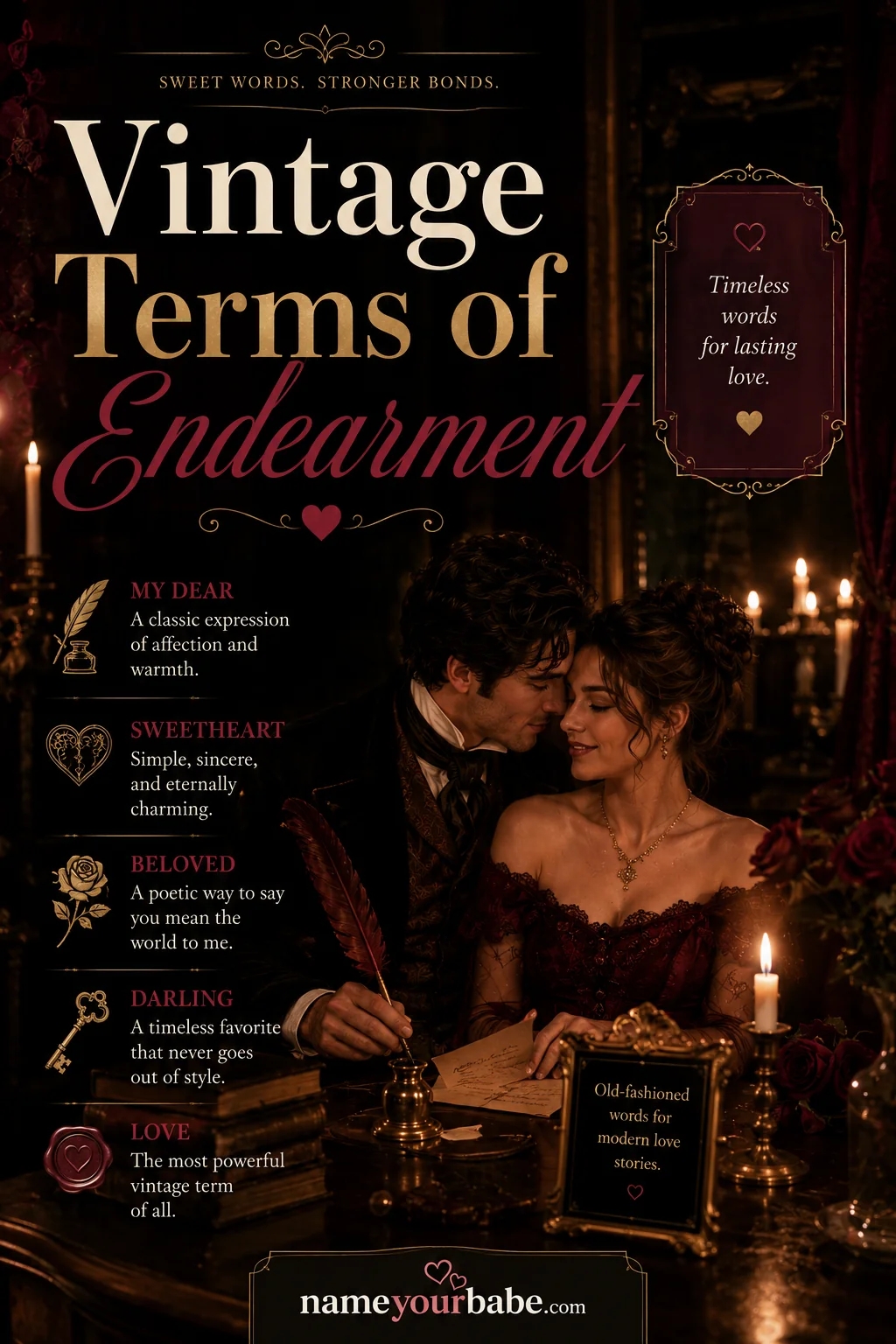
Love the vintage feel? See our old-fashioned nicknames for boyfriend and vintage terms of endearment, or the sweet pet names for older couples. For more French charm, browse French pet names, and for a modern cousin of beau, read what does boo mean. The pet name generator has many more.
Frequently Asked Questions
What does beau mean?
A beau is a boyfriend or male sweetheart. It is a charming, old-fashioned word, so "her beau" means "the man she loves."
How do you pronounce beau?
Say it "boh," so it rhymes with go and snow.
What is the plural of beau?
Both beaux (the French spelling) and beaus are correct in English. Beaux looks fancier; beaus is simpler.
Where does the word beau come from?
It comes from the French word beau, meaning handsome or fine, which goes back to the Latin word bellus, meaning pretty.
What is the female version of beau?
The closest match is belle, the French word for beautiful, as in "belle of the ball." English has no exact female twin, so people often say sweetheart.